eVTOL Air Taxis: How Electric Aircraft Could Transform Urban Travel
With FAA-backed trials set for this summer, the era of urban air taxis is moving closer to reality
By Nicole Suárez

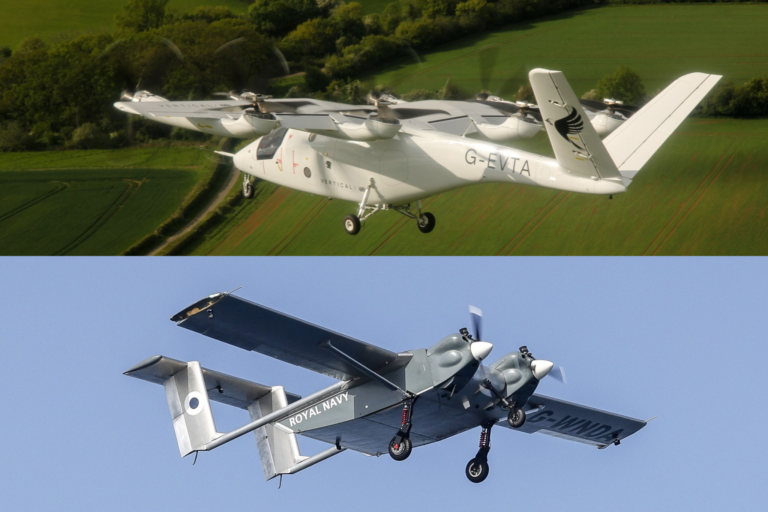
Image credits: Vertical Aerospace
Urban traffic remains a persistent burden on commuters. In 2025, the average American driver lost 49 hours to traffic, up six hours from the prior year, costing the nation $85.8 billion in lost time, according to the INRIX 2025 Global Traffic Scorecard.
It is in this context that electric vertical takeoff and landing aircraft, or eVTOLs, are moving closer to commercial deployment. Also known as air taxis, these aircraft use electric motors to take off and land vertically like a helicopter, then cruise efficiently like a small airplane, offering lower noise levels and zero direct in-flight emissions compared to conventional helicopters.
Several companies are now in active flight testing, while aviation authorities in the United States and Europe have established dedicated certification frameworks to manage their operation.
Beating the Traffic
One of the most frequently cited applications for eVTOLs is urban air taxi service. In New York, for example, a city where eVTOL developers such as Joby Aviation and Archer Aviation are working toward commercial operations, drivers lost 102 hours in 2025, costing the average driver $1,879 and the city $9.7 billion, according to the INRIX report.
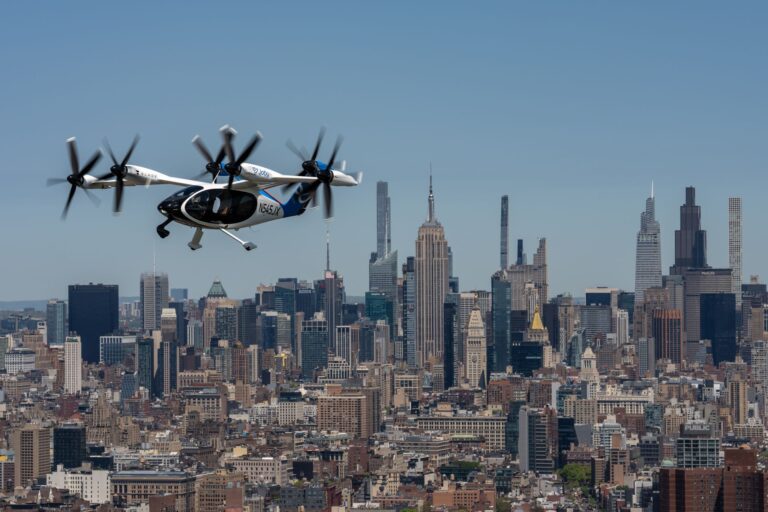
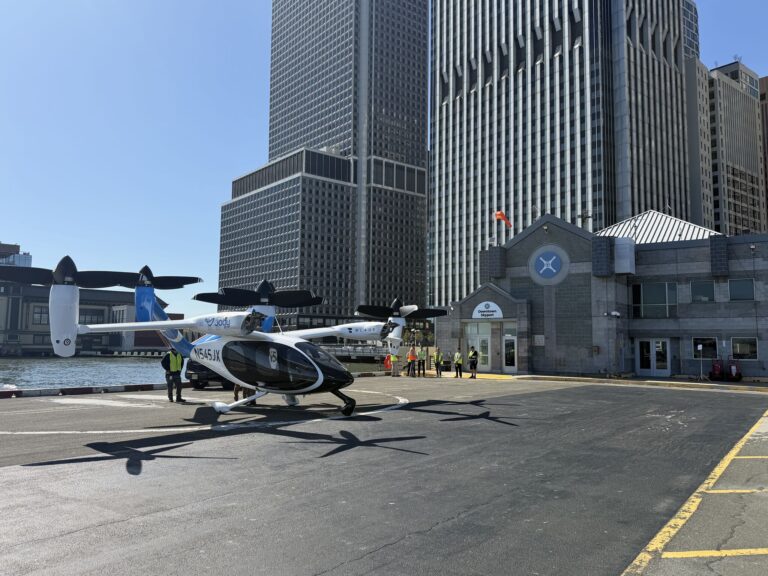
In late April 2026, Joby Aviation conducted the first public eVTOL demonstration flights in New York City, connecting Manhattan heliports to JFK International Airport in under 10 minutes, a route that typically takes one to two hours by car.
“Getting from Manhattan to JFK by car today can take well over an hour,” a Joby spokesperson told Carbon Free Aviation. “Joby’s electric air taxi is designed to change that, offering a quiet, zero-emission alternative that turns that commute into a 7-minute flight.” While Joby has not formally announced pricing, industry analysts and media reports have estimated seats will be priced at approximately $200 (or $3-$6 per mile), comparable to the Blade helicopter service the company acquired, which previously operated the same route.
Through its acquisition of Blade’s passenger helicopter business, which carried more than 90,000 passengers in 2025, the company already operates a dedicated network connecting Manhattan to JFK and Newark. “We’ve always seen this as something designed to become part of daily life — not a luxury, but a routine,” a Joby spokesperson told Carbon Free Aviation.
Beyond the Commute
Other proposed use cases include emergency medical services, cargo logistics, and connections between airports and cities.
The Federal Aviation Administration’s (FAA) eVTOL Integration Pilot Program (eIPP), an initiative launched in March 2026 to test and accelerate the deployment of Advanced Air Mobility (AAM) aircraft, lists emergency medical response among its core operational concepts, with participating companies including BETA Technologies
BETA was selected to participate in seven of the eight launch programs under the initiative, the most of any electric aircraft developer, with planned operations spanning cargo delivery, medical logistics, and organ transportation in partnership with companies including UPS and United Therapeutics.
Noise reduction is another cited advantage. Joby Aviation, whose aircraft underwent acoustic testing with NASA, recorded sound levels of 45.2 decibels during overhead flight at cruise altitude, barely perceptible, the company says, against the ambient noise of a city, and below 65 decibels during takeoff and landing, comparable to a normal conversation.
A Cleaner Way to Fly
eVTOLs produce zero direct in-flight emissions and manufacturers project they will become cheaper to operate than conventional helicopters as battery technology matures and fleets scale, though analysts note those cost advantages remain unproven until aircraft accumulate real operational hours.
Infrastructure requirements also represent an open variable. Vertiports will need to be built and integrated into existing transit networks, and charging systems will need to scale alongside fleet growth. Urban planners and transit researchers have generally argued that eVTOLs are more likely to complement existing public transportation systems than replace them.
Electric air taxis are expected to begin operational trials as early as summer 2026, marking the start of what could be a significant shift in how people move through and between American cities.