Wisk Aero to Expand Certification Testing With Second Aircraft
The autonomous air taxi maker now operates two conforming test aircraft as it pushes toward FAA certification
By Nicole Suárez
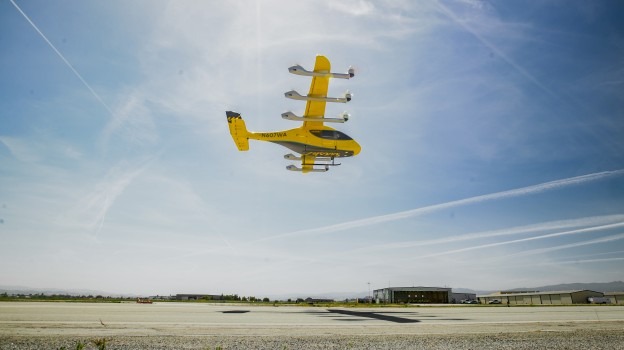
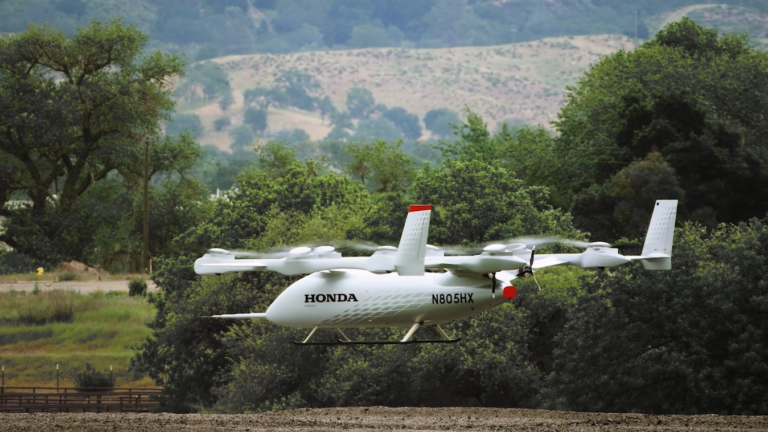
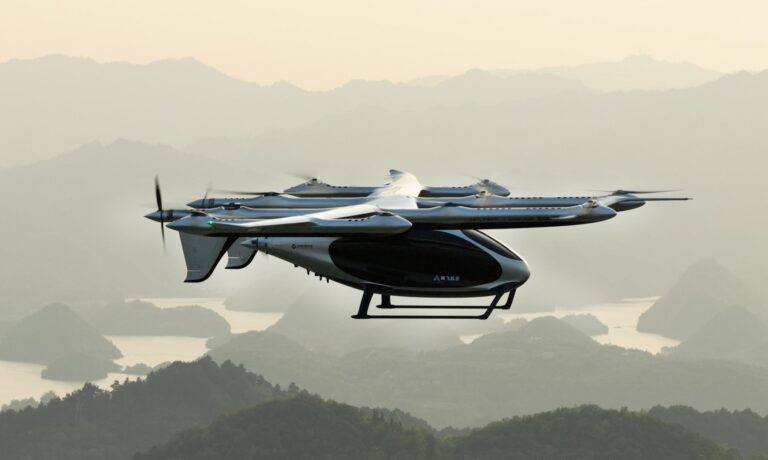
Wisk Aero, the Boeing-owned autonomous aviation company, said on May 4 that a second Generation 6 aircraft has completed its first flight, bringing its active test fleet to two vehicles for the first time.
The flight was conducted at Wisk’s facility in Hollister, California, and included vertical takeoff, hover, and chirp maneuvers, which are the first steps used to characterize the aircraft performance before engineers begin pushing it to higher speeds and more demanding conditions
The first Gen 6 aircraft began its own flight test campaign in mid-December 2025, meaning Wisk built and flew a second conforming test vehicle in roughly five months.
In aviation certification programs, the size of the test fleet has direct consequences for timeline, for example, in 2014, Airbus used a five-aircraft fleet to complete its type certification campaign in a record 15 months, logging more than 2,600 flight hours, and achieved roughly double its historical hourly flight rate compared to prior programs.
A larger fleet allows parallel test campaigns and keeps the program moving if one airframe requires maintenance.
Wisk said the addition of a second active Gen 6 flight test vehicle significantly expands its capacity to collect data, validate systems, and accelerate its flight test campaign. The dual-vehicle program will focus on expanding the flight envelope, including transitions from hover to wing-borne flight while also continuing to refine control laws and overall system performance.
“This pace of execution is exactly what is required to meet the rigorous safety standards of commercial aviation,” said Sebastien Vigneron, CEO of Wisk. “Having multiple aircraft in flight testing allows us to move faster, learn quicker, and stay on the leading edge of autonomous aviation.” he added.
The Gen 6 is all-electric and designed to operate without an onboard pilot with a ground-based operator providing human oversight, a model Wisk has said is necessary for safety, scalability, and affordability. The aircraft is designed to meet or exceed existing commercial aviation safety standards, though Wisk has not disclosed a target date for receiving FAA type certification, which is required before the company can carry paying passengers.
The expanded test capacity also supports Wisk’s role in the U.S. Department of Transportation’s electric vertical take-off and landing (eVTOL) and Advanced Air Mobility Integration Pilot Program, known as eIPP, after the White House selected the Texas Department of Transportation as a partner in that initiative. Under the program, Wisk is expected to conduct real-world flight operations in the national airspace using its autonomous systems and aircraft.
The Gen 6 program builds on more than 1,750 test flights Wisk has logged across its previous five aircraft generations since 2010, including nearly 200 with its Generation 5 alone
Wisk said it continues to work with the FAA and NASA on the broader integration of advanced air mobility into U.S. airspace.