Cargo before passengers: The eVTOL industry's safest path to commercialization
By Nicole Suárez, Carbon Free Aviation Journalist
13 March 2026
The race to commercialize electric vertical takeoff and landing aircraft (eVTOL) has long been framed as a contest for who will carry passengers first, however, questions have arisen about what the best strategy might be to approach this goal. Should future air taxis leap straight into passenger service, or is it wiser to build experience with cargo and logistics missions first?
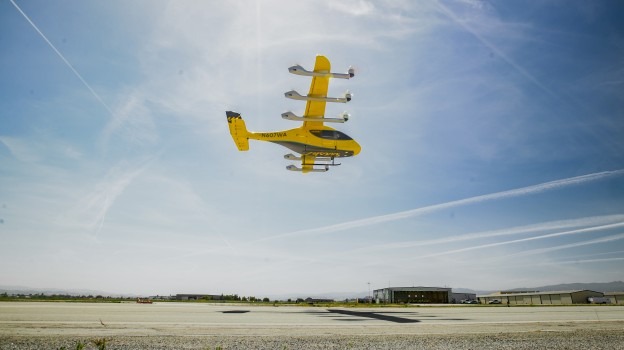
Companies such as AutoFlight in China and BETA Technologies in the U.S.are focusing on freight operations before passenger service, accumulating flight hours, operational data, and regulatory track records in conditions where a failure, however costly, does not carry the irreversible cost of a human life.
The companies furthest along are betting on freight
Many eVTOL companies are moving toward logistics as a more realistic route to initial service deployment. For instance, China’s AutoFlight has already demonstrated the competitive advantage of this strategy in practice. AutoFlight’s CarryAll has become the first eVTOL above one ton to achieve full type, production, and airworthiness certification from Chinese authorities, clearing its way for commercial cargo flights.
The company is now progressing a six-passenger urban aircraft through certification and has unveiled a 10-passenger regional aircraft, each stage building directly on operational data from the cargo program that came before it.
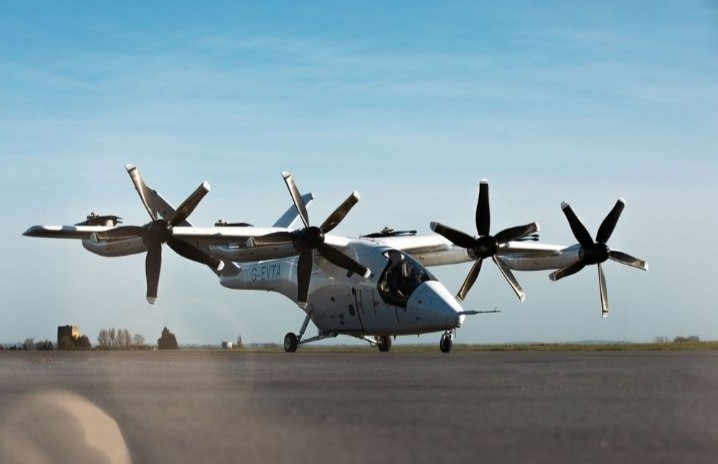
BETA Technologies, a Vermont-based manufacturer, has taken a similar approach. The company has explicitly centered part of its strategy on cargo and medical logistics missions under the FAA’s Advanced Air Mobility Integration Pilot Program (eIPP), aiming to conduct real-world operations and learn from them before scaling up to full passenger services.
BETA is targeting FAA certification for its cargo-capable CX300 conventional aircraft in late 2026, with its eVTOL passenger variant, the Alia A250, to follow roughly a year later. As CEO Kyle Clark told FlightGlobal, the strategy is “way more pragmatic and aligned with the expectations of the FAA.”

The FAA is counting on cargo operations too
The FAA has also emphasized the importance of gathering operational data before full certification. On March 9th, the U.S. Department of Transportation and the FAA unveiled eight pilot projects under the eIPP, which will test different kinds of operations including cargo logistics and emergency medical missions. Data from these real-world flights will help regulators develop the rules needed to safely integrate eVTOL aircraft into the national airspace system. (Read more about it on our website)
Beyond certification, the eVTOL industry also faces the issue of public acceptance. Aviation’s strong safety record was built through decades of incremental operational experience and learning from incidents; the eVTOL sector has yet to undergo that process, meaning a high-profile early passenger accident could significantly delay the broader development of the industry.
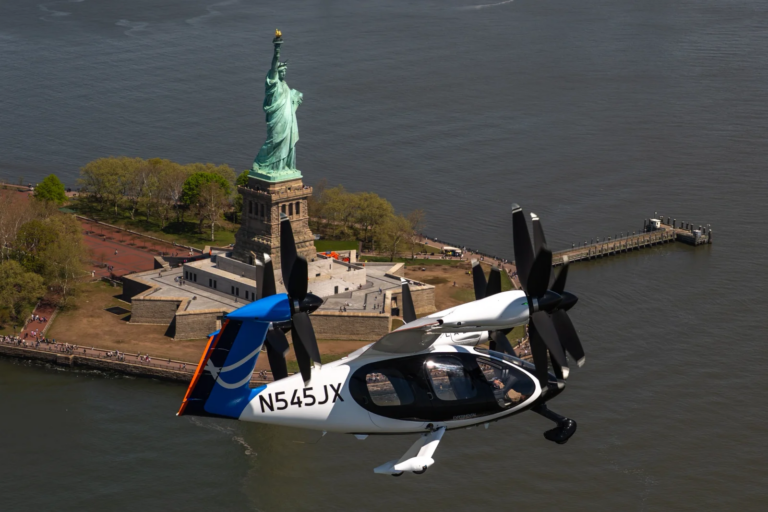
An Archer Aviation spokesperson (one of the companies selected for the eIPP) told Carbon Free Aviation that the program can help build trust within the communities ahead of the 2028 Olympic Games in Los Angeles. The company also added that it can “prove to regulators, operators and future customers the tech is safe, quiet and ready.”
According to a 2020 study published in the Journal of Air Transport Management, willingness to board an autonomous or electric aircraft depends on earned confidence in the technology, the operator, and the regulatory system. Cargo missions can help build that trust without putting passengers at risk.
The companies closest to certification are pointing in the same direction. A gradual approach, beginning with cargo and logistics operations, may offer the most reliable path toward eventual passenger eVTOL services.