The main challenge for SAF is the deployment of technology
By Samuel Herrera, Carbon Free Aviaiton Journalist
The International Air Transport Association (IATA), in collaboration with Worley Consulting, has published a study that reshapes the outlook on aviation’s path to decarbonization.
The report confirms that there are sufficient sustainable feedstocks available to produce the amount of sustainable aviation fuel (SAF) required to achieve net-zero carbon emissions by 2050. However, it warns that the real challenge does not lie in the availability of feedstocks, but rather in the delays in deploying the necessary technologies and in establishing policies that prioritize SAF production for aviation.
The study highlights that aviation will need around 500 million tons of SAF annually by 2050, a goal that can only be reached through a combination of two main sources: more than 300 million tons derived from biomass and around 200 million tons produced through power-to-liquid (PtL) processes, which use renewable electricity, green hydrogen, and carbon capture. Currently, the only technology operating at commercial scale is HEFA, which converts used cooking oil into jet fuel—underscoring the urgent need to diversify and scale up new technological pathways.
Competition with other industries for the same feedstocks is another critical factor. IATA stresses that governments must ensure that available biomass is allocated to sectors that are hardest to decarbonize, such as aviation, where SAF is practically the only viable alternative. The rollout of clear and coordinated public policies will be essential to unlock investments, secure resilient supply chains, and accelerate the shift from pilot projects to large-scale commercial production.
For Willie Walsh, IATA’s Director General, the conclusion is unequivocal: “We now have irrefutable evidence that if SAF production is prioritized, the availability of feedstocks will not be a barrier to the sector’s decarbonization. There is sufficient potential feedstock from sustainable sources to achieve net zero carbon emissions by 2050. However, this will only be achieved if the development of the SAF industry is significantly accelerated. We need to get to work now.”
The study also highlights regional opportunities. North America, Brazil, Europe, India, China, and ASEAN could become major hubs for global SAF production, creating jobs, stimulating local economies, and strengthening energy security goals. To achieve this, it will be essential to mobilize the energy sector, increase infrastructure investments, and align business strategies with decarbonization targets.
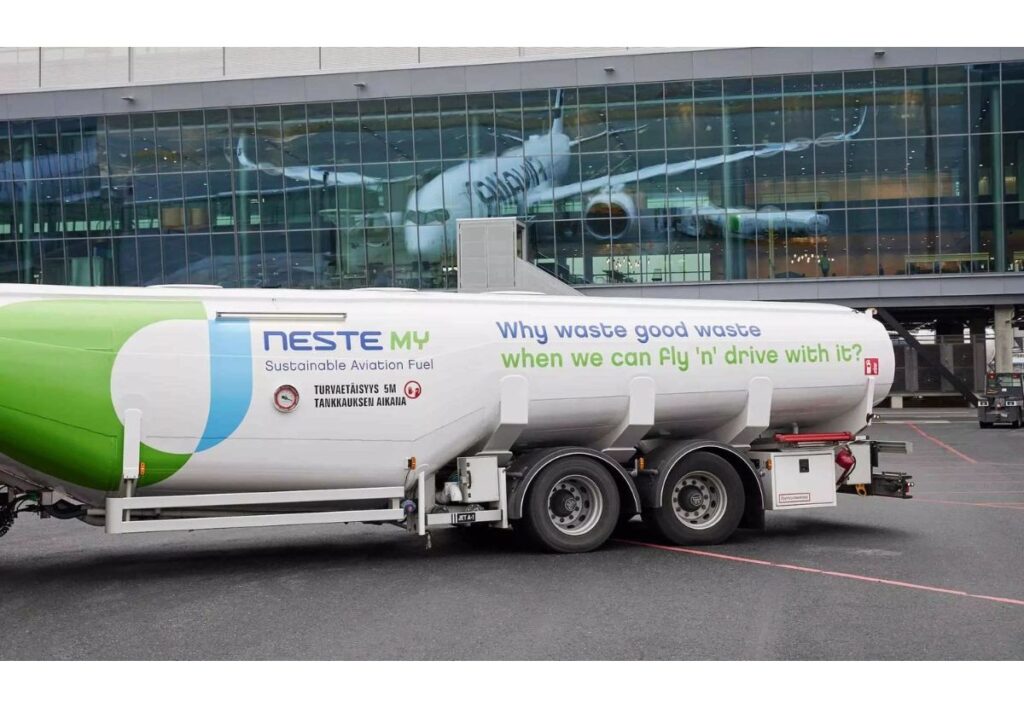
In parallel, IATA points to its Net Zero Roadmaps, which outline the steps required to reach the 2050 goal. These roadmaps include five pillars: new aircraft technologies, energy infrastructure, operational efficiency, financing, and public policy. Together, they demonstrate that the transition does not depend solely on airlines, but on broad collaboration among governments, investors, energy producers, and regulators. The scale of the challenge is evident in the projected investment: an average of more than $128 billion annually until 2050.
The aviation industry has the potential to reconcile growth with sustainability, but the time to act is limited. The IATA-Worley study not only provides scientific evidence but also delivers a clear and urgent call to action: to turn feedstock availability into real SAF production, accelerate the deployment of new technologies, and secure the political and financial frameworks that will enable the sector to meet its net-zero commitment by 2050.