United CEO raises concerns over air taxi flights at busy airports
By Nicole Suárez, Carbon Free Aviation Journalist
30 March 2026

Comments by Scott Kirby, chief executive of United Airlines, are raising doubts about one of the electric air taxi sector’s core assumptions: that high-frequency shuttle flights to and from major hub airports represent the industry’s most viable early business case.
Speaking at a United Airlines media event in Los Angeles on March 24, Kirby opposed operating electric vertical take-off and landing (eVTOL) aircraft in already congested airport environments, citing both safety and operational concerns. Kirby was referencing the Washington DC midair collision that occurred in January 2026.
“Unless we can do it that’s 100% safe without impacting any operations on the field, I would be opposed to it, and I don’t think we can do it 100% safe without impacting operations on the field,” Kirby said.
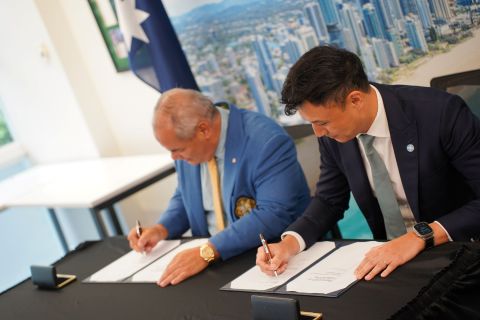
The remarks carry particular weight given United’s own role in backing the sector. At the start of 2021, United announced a $1+ billion commitment to Archer Aviation, with plans to deploy aircraft on short urban routes linking city centers with major airports.
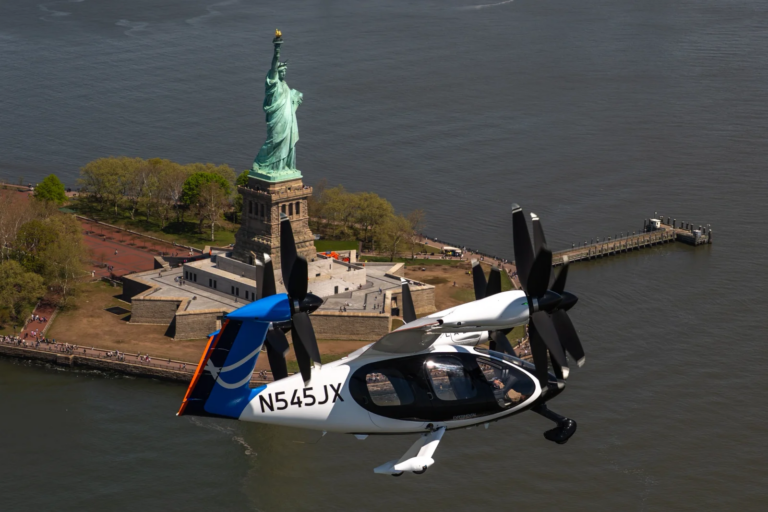
For much of the past five years, the airport-connection model has been one of the foundations of the business strategy for eVTOL developers, such as Joby Aviation and Archer. The concept is to replace unpredictable, often lengthy ground commutes in congested metropolitan areas with short flights between dense urban centers and airline hubs.
In New York, for instance, Archer has proposed a vertiport network connecting Manhattan helipads with JFK, LaGuardia, and Newark, aiming to cut travel times that can exceed 90 minutes by car in heavy traffic. This approach has been widely viewed as the sector’s strongest near-term revenue opportunity, positioning eVTOL services as an extension of the airline journey rather than a standalone mode of transport.
Kirby’s comments, however, highlight a tension between commercial logic and operational reality. Major hub airports are among the most complex and congested environments in aviation. Roughly 40,000 civil helicopters operate globally according to industry estimates, with activity concentrated in emergency medical services, law enforcement, and offshore oil and gas, not high-frequency urban shuttles. The airport connector model would demand dozens of daily rotorcraft movements layered into some of the world’s busiest controlled airspace. That is the operational tension Kirby appears to be pointing at.
That tension raises questions about infrastructure strategy, particularly the role and placement of vertiports. While many early concepts have focused on colocating vertiports at or adjacent to major airports, Kirby’s concerns suggest that alternative configurations, such as distributed urban vertiports feeding into airports indirectly, may become more relevant.
The location of these facilities is widely considered a critical determinant of viability. Vertiports must balance proximity to demand centers with operational feasibility, including airspace integration, ground access and energy supply, factors that could ultimately shape network design as much as aircraft performance.
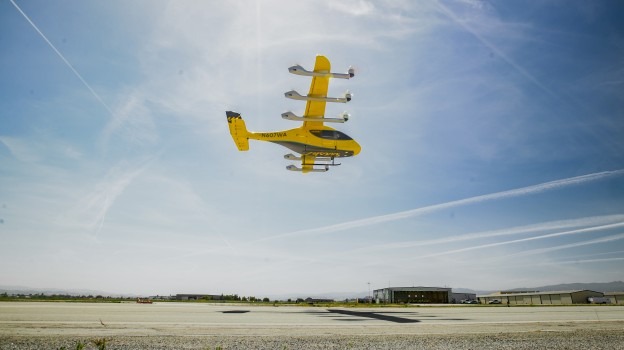
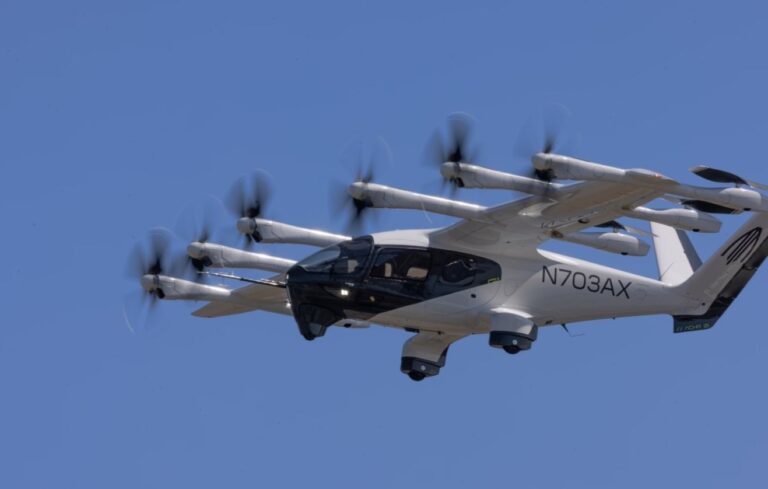
On the certification front, progress in the sector remains tangible. On March 11, Joby Aviation completed the first flight of its FAA-conforming aircraft in Marina, California, formally entering Stage 5, the final phase of FAA type certification. It is the most concrete proof point the industry has produced to date, though commercial service at scale near major airports remains a separate question from airworthiness.
In that context, Kirby’s remarks may not signal a rejection of eVTOLs altogether, but rather a reframing of where and how they can be deployed. The next concrete milestone worth watching is the FAA type certificate, expected no earlier than 2027. Between now and then, the sector has a more immediate question to answer: if not at major airports, then where?