
Joby, BETA, Archer among companies chosen to launch first U.S. air taxi operations
By Nicole Suárez, Carbon Free Aviation Journalist
10 March 2026
The U.S. Department of Transportation and the Federal Aviation Administration (FAA) announced Monday the first projects selected under the eVTOL Integration Pilot Program (eIPP), a federal initiative designed to accelerate the introduction of advanced air mobility (AAM) aircraft into the national airspace.
The program creates partnerships between aircraft developers, local governments and infrastructure partners to test real-world operations for electric vertical takeoff and landing aircraft (eVTOLs). These aircraft are expected to enable new forms of transportation such as urban air taxis, cargo delivery and emergency medical flights.
According to the Department of Transportation, the goal of the pilot program is to collect operational data that will help regulators develop national policies, safety standards and infrastructure frameworks necessary for large-scale advanced air mobility operations.
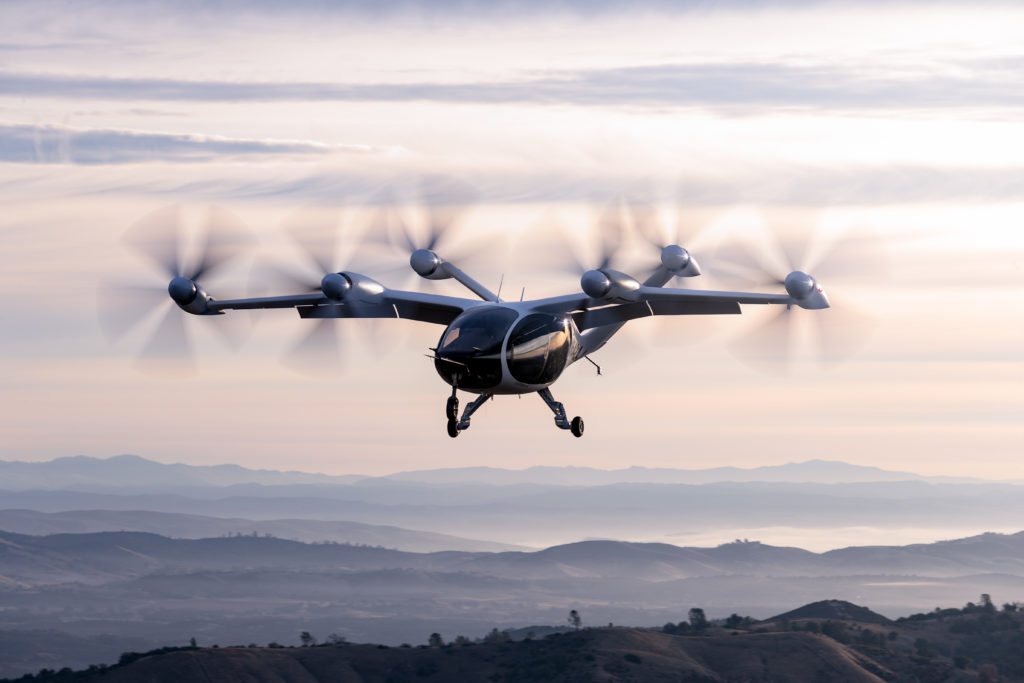
The companies chosen
The eight selected proposals span 26 states and include projects supported by leading AAM developers such as Archer Aviation, BETA Technologies, Joby Aviation, Wisk Aero, Ampaire, Elroy Air, and Reliable Robotics. Each project is anchored by a government entity, from the Port Authority of New York and New Jersey to state transportation departments in Texas, Utah, Pennsylvania, Louisiana, Florida, and North Carolina, as well as the city of Albuquerque.
BETA Technologies emerged as the program’s broadest participant. The company was selected to join seven of the eight launch programs (the most of any electric aircraft developer) with operations expected to touch all 26 states participating in the program.
A new regulatory approach
The eIPP represents a significant change from traditional aviation certification. Earning full type certification (the agency’s standard stamp of airworthiness) typically takes a decade or more. Under the eIPP, outlined in President Trump’s executive order on drone dominance, selected companies may begin certain operations before that process is complete, potentially compressing years of regulatory waiting into months of real-world demonstration.
The public is expected to begin seeing operations under the program by summer 2026, with the full initiative running three years from the launch of the first project. Transportation Secretary Sean Duffy framed the effort as central to U.S. competitiveness in aviation, and FAA Deputy Administrator Chris Rocheleau said the data collected will directly shape future regulatory frameworks.
If the eIPP succeeds, it could establish the United States as the global benchmark for integrating electric air mobility, an industry that worldwide could grow to $500 billion to $600 billion annually, as forecast by McKinsey & Company. If it stumbles, it may set the entire sector back significantly.