Joby and Archer post heavy losses as air taxi race intensifies
By Nicole Suárez, Carbon Free Aviation Journalist
12 March 2026
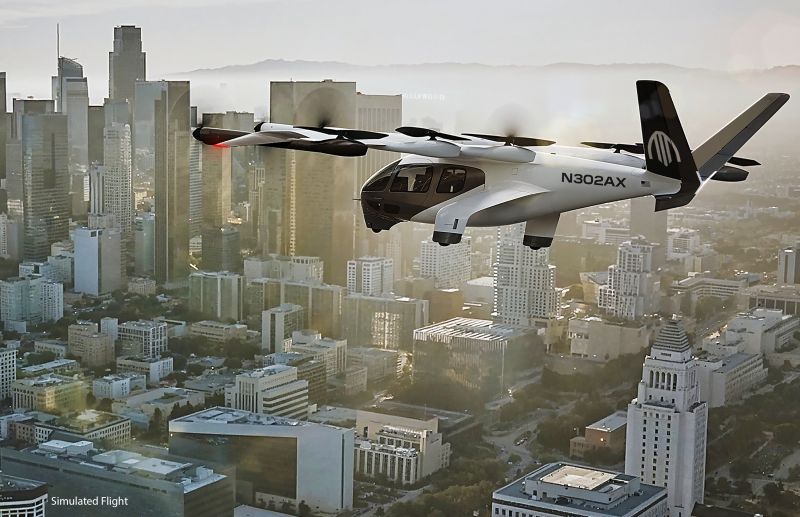
Joby Aviation and Archer Aviation, two of the most closely watched companies in the electric air taxi sector, released their fourth-quarter and full-year 2025 financial results in late February and early March. Together, the two companies reported approximately $1.55 billion in combined net losses for 2025, highlighting both the scale of investment required and the early stage of the advanced air mobility (AAM) sector.
With no meaningful air taxi revenue yet and spending accelerating, Joby and Archer are nonetheless racing toward certification and first commercial operations, and investors and regulators, particularly in the United Arab Emirates, continue to support the companies’ efforts. Still, questions remain: which company, if either, is closer to commercialization?
The numbers: large losses, strong liquidity
For Joby, 2025 was framed as a transition year between development and commercial readiness. The California-based firm reported meaningful revenue for the first time: $53.4 million for the full year, largely driven by its acquisition of Blade Air Mobility’s helicopter passenger business, while posting a net loss of $929.8 million. Operating expenses reached roughly $773 million as the company expanded manufacturing and certification efforts.
Despite continued losses, Joby ended 2025 with about $1.4 billion in cash and investments, a figure strengthened further by additional financing early in 2026. These funds are intended to support aircraft certification, manufacturing scale-up, and early commercial operations.
By contrast, Archer’s 2025 results paint the picture of a company with more liquidity but less operational traction. Archer reported just $0.3 million in revenue for the year while posting a net loss of $618.2 million, up 15.2% from the previous year. Operating expenses rose to $729.6 million, driven by continued investment in development and production. The company ended the year with about $2 billion in liquidity (the highest level in its history), supported by $1.8 billion raised through three capital offerings in 2025.
While Archer’s loss was smaller, Joby’s higher spending reflects its more advanced certification effort and the operational costs associated with running Blade’s passenger business.
Who is closer to certification?
Where the two companies differ most clearly is in the regulatory process required before commercial service can begin.
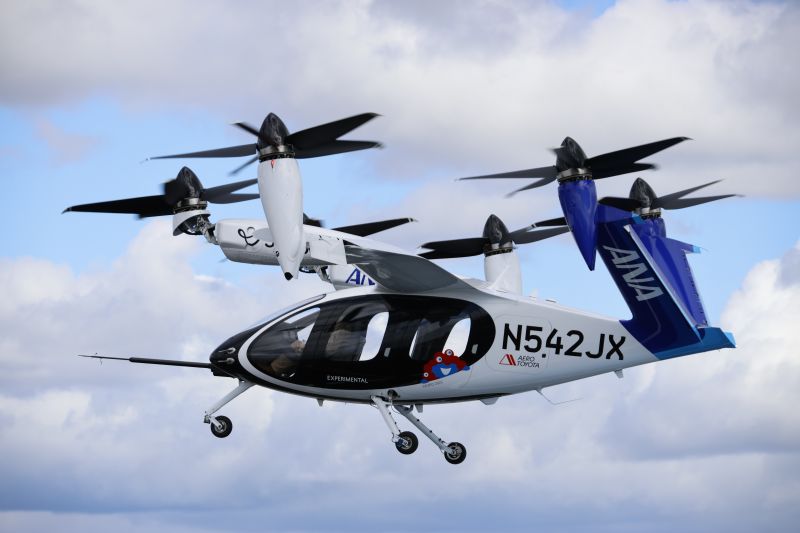
Joby reported significant progress through Stage 4 (Testing and Analysis) of the aircraft certification process overseen by the Federal Aviation Administration (FAA), advancing that phase to 80% completion on the company’s side. The company is preparing aircraft for Type Inspection Authorization (TIA) testing, during which FAA pilots conduct official “for-credit” flight tests prior to the issuance of a type certificate.
Archer reached a different milestone: the FAA accepted 100% of the Means of Compliance documentation for its Midnight aircraft, a prerequisite that allows the company to proceed toward the TIA phase. Archer has also expanded piloted flight testing of Midnight as it builds out its certification fleet.
Taken together, the progress suggests Joby appears to be somewhat further along the FAA certification sequence (already in TIA preparation while Archer is entering it). The gap may be months rather than years, but in an industry where timeline slippage is routine, that distinction matters to partners and investors planning around a launch date.
The UAE: the first real launch market
In parallel, both companies have set their sights on the United Arab Emirates as the first commercial market for their aircraft, and both are pursuing parallel regulatory pathways there, independent of their FAA processes.
Joby plans to operate in Dubai, working with the city’s Roads and Transport Authority to build a network of vertiports near major destinations with first passenger flights expected before the end of 2026. Archer is pursuing a parallel strategy in Abu Dhabi, partnering with Abu Dhabi Aviation and working with the General Civil Aviation Authority on a restricted type certification pathway, a pathway designed to enable early commercial operations without waiting for full FAA approval. The GCAA has confirmed it is using the FAA framework as a foundation while tailoring requirements to UAE domestic conditions.
Based on the 2025 results, Archer Aviation has made notable regulatory progress including a restricted type certificate program with the GCAA, still, Joby Aviation appears closer to commercialization, as the company holds a measurable lead on certification. Yet, being “closer” does not guarantee success. Ultimately, both companies must prove that electric air taxis can operate reliably and profitably at scale.