
A collaboration that development Advanced Air Mobility (AAM)
By Samuel Herrera, Carbon Free Aviation Journalist
The partnership announced between Wisk Aero and Signature Aviation marks an important development in the race to define the infrastructure backbone of Advanced Air Mobility (AAM). The agreement, framed under a Memorandum of Understanding (MOU), is not about aircraft design or regulatory lobbying alone, but about the groundwork needed to move autonomy from test flights into daily operations, for investors and executives, the significance lies in the shift from technology demonstration to infrastructure integration, an area that will determine which companies can actually scale beyond prototypes.
The collaboration is designed to test the feasibility of vertiports in Signature locations, evaluating the commercial, regulatory, financial, and operational frameworks needed for autonomous flight, the partners have already initiated tangible work at Ellington Airport (EFD) in Houston, Texas, where they are defining layouts and infrastructure blueprints in coordination with the Houston Airport System, this provides early proof of execution and an operational template that can be replicated in other markets.
From a strategic perspective, the partnership addresses one of the central bottlenecks for AAM: the readiness of infrastructure. Aircraft certification and technology readiness are necessary but not sufficient. By combining Wisk’s autonomous aircraft with Signature’s network and established customer base, both companies are positioning themselves to reduce this gap and, in effect, define the standards others may later follow.
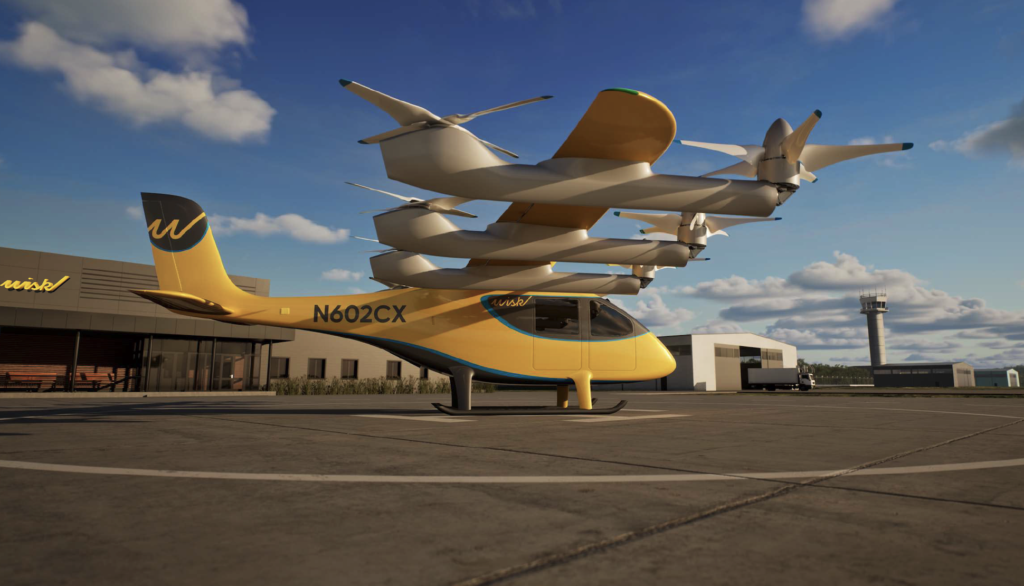
For Signature, the partnership aligns with its broader push into sustainability and aviation modernization, Adding autonomous AAM to its service offering could expand its role from a facilitator of private aviation to a central operator of next-generation mobility networks. For Wisk, the access to existing infrastructure and customers significantly lowers the barrier to scaling commercial operations, while reinforcing his position in the autonomous AAM segment.
Looking ahead, the implications for investors and industry strategists are clear, the race in AAM will not be decided solely by who builds the most advanced aircraft, but by who creates viable ecosystems where those aircraft can operate safely, efficiently, and at scale. The Wisk–Signature partnership represents an attempt to integrate these elements into a functional model.
The outcomes in Houston could inform regulatory dialogues, establish operational benchmarks, and provide confidence to capital markets that AAM is moving from vision to structured execution.
For decision-makers evaluating this space, the key takeaway is that infrastructure partnerships will likely determine the speed and scope of AAM commercialization.
Technology is advancing rapidly, but operational adoption will hinge on how well aircraft developers, infrastructure operators, and regulators coordinate, The Wisk–Signature collaboration suggests that those who take early positions in shaping vertiport ecosystems may hold the strongest leverage as the sector transitions from pilot projects to commercial networks.
Image Credits: Wisk